

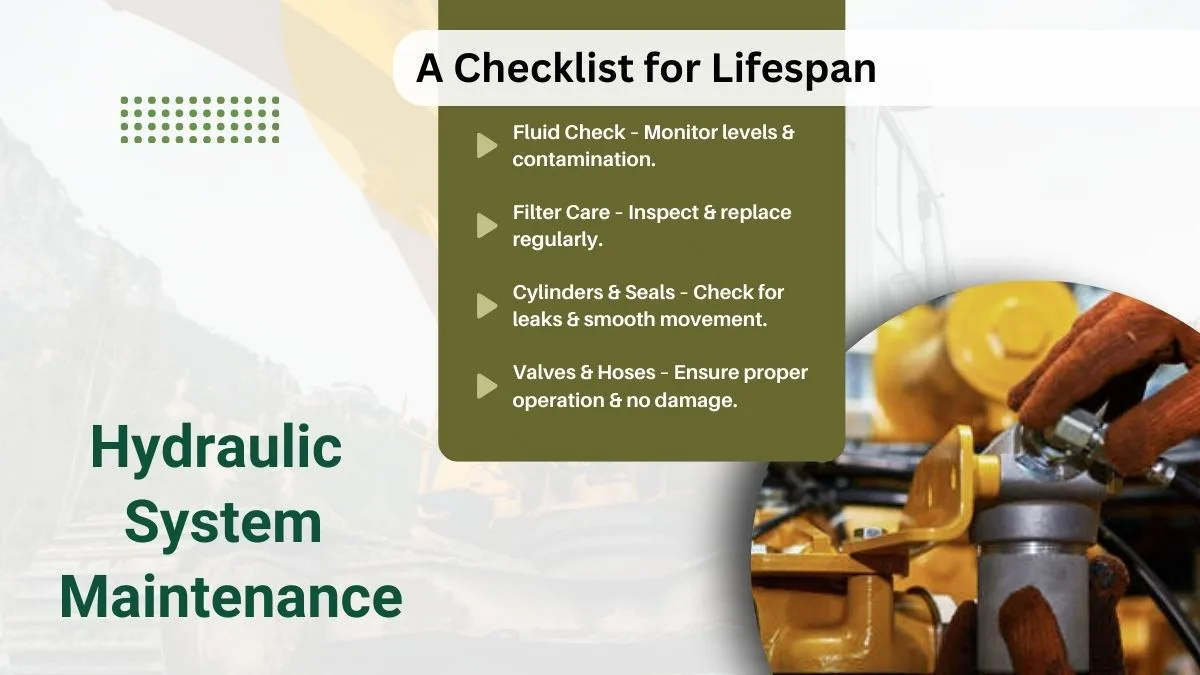
You know what it is like when a machine stops working on a busy construction site, it is really annoying. I’ve seen it happen too many times. The loader stops, the operator scratches his head, and everyone waits. Deadlines slip. Stress rises. Most of the time, a little hydraulic system maintenance checklist can save you from these headaches.
Hydraulic systems power your machines like pumps, motors, cylinders, and valves.
Everything. They’re all delicate, but we often treat them like they’re indestructible. Trust me, they’re not. A small mistake today can lead to hours or days of downtime tomorrow. So let’s go through a hydraulic system maintenance checklist to make sure your machine works without problems.
1. Fluids: The Lifeblood
Hydraulic fluid acts like blood to your machine; it keeps everything moving. Low, dirty, or the wrong type of fluid can quickly damage pumps and valves.
Levels: Check the fluid every day, especially if the machine is being used heavily. Low fluid levels can lead to overheating and cavitation.
Quality: If the fluid looks cloudy or has a foul odor, replace it immediately. This could mean that water, dirt, or air got into the system.
Type: Always use the fluid as recommended by the manufacturer. If you use something else, it could damage the system.
Tip: When you top up fluid, add only a small amount at a time. This will prevent air bubbles from forming, which can cause pistons to act erratically.
2. Hoses & Connections
Hoses are like veins in your machine. When they go wrong, your entire system goes wrong.
Condition Check: Look for cracks, bulges, or fraying. If you find a damaged hose, replace it as soon as possible.
Fittings: Make sure everything is right. Don’t overtighten and don’t leave anything loose. A lot of problems happen here due to human error.
Rubbing Points: Check if hoses are rubbing against metal parts. This happens a lot on busy job sites. Use protective sleeves to prevent damage.
3. Filters and Strainers
Filters protect your system by preventing minute particles that will damage your machine.
Replace on Time: Always change filters on time. Don’t wait until they are dirty else your machine will suffer damage.
Watch the gauges: If the pressure starts rising, the filter has become clogged. Replace it immediately.
Strainers: Always clean or replace strainers at suction points on a frequent basis. Strainers prevent larger debris from getting into your pump.
4. Cylinders and Pistons
Cylinders are important components of your system because they convert hydraulic pressure into motion. However, hydraulic cylinder problems can cause downtime and costly hydraulic cylinder repair.
Examine piston rods closely. Scratches, dents and rust, can image the smoothness of operation. Inspect seals for leaks as well. No leak is ever a small leak. Each drop of fluid decreases efficiency and increases wear.
Also don’t forget about the cylinder mounts! These need to be tight and properly aligned. A loose mount can misalign the cylinder, and lead to even bigger failures, resulting in immediate hydraulic cylinder repair needs.
5. Pumps and Motors
The most important unit of the hydraulic system if you find these below points causing immediate action to correct the problem and save your machine life from danger. Below are the some important early signs –
Knocking, whining or grinding? Something’s off. Could be cavitation or air in the system.
Temperature check: Overheated fluid damages seals and causes foam.
Couplings and drives: misalignment = vibration = shorter lifespan.
If these issues are arising in your machine then do not wait, immediately go for Hydraulic Pump and Motor Repair.
6. Valves and Actuators
- Valves are the traffic controllers of your hydraulic system. They regulate flow and direction. If they’re ignored, overall efficiency takes a hit.
- Operate them regularly and watch for smooth, consistent movement. Any stiffness or resistance could signal trouble.
- Also, keep an eye out for leaks around valves and actuators. Even minor leaks can throw the system off balance. If performance seems uneven, calibration may be necessary to restore proper function and prevent costly downtime.
7. Hydraulic Reservoir
The reservoir stores hydraulic fluid and helps keep the system cool, but is sometimes overlooked during servicing.
Clean the Tank: Eventually sludge and dirt build up at the bottom. Regularly clean it to avoid potential issues.
Check Vents: Make sure vents are not obstructed. If air cannot properly move through the vents then the system’s efficiency will be compromised.
Baffles & Screens: These components prevent fluid turbulence and prevent sediment from being disturbed. Inspect these components regularly.
8. Keep It Clean-
Hydraulic systems do not like dirt. Even small bits of particulate will create failures. so,
- Keep work areas dust-free.
- Cover open ports during maintenance.
- Fill fluids carefully. No rushing.
Suggested: Why is your Hydraulic Pump Dying Early?
9. Monitor Pressure and Temperature
- Use gauges to check system pressure. Don’t guess.
- Watch fluid temperature. Overheating = damaged seals.
- For critical machines, sensors and alarms are lifesavers.
10. Maintain a Log
Seriously, this helps.
- Record fluid changes, filter replacements, inspections, and repairs.
- Note unusual behavior.
- Analyze trends. Prevent recurring issues.
Even a simple notebook works. You’d be surprised how many small problems show up when you review logs.
Check it out: Why Choose Authorized Service Centers for Danfoss Hydraulic Pump Repair?
Extra Tips
- Train operators. Improper use damages systems faster than wear and tear.
- Use high-quality or OEM parts. Cheap ones fail faster.
- Preventive maintenance beats reactive fixes every time.
- Act immediately on leaks, noises, or heat. Don’t wait.


Conclusion-
Hydraulic systems are very powerful, but they are also very sensitive. Regular attention to fluids, hoses, filters, pumps, cylinders, and valves can help to keep them running smoothly for long. Small actions today prevent major failures tomorrow.
Based on my experience across Delhi NCR construction sites, I have found that machines that undergo routine checks with a comprehensive hydraulic system maintenance checklist tend to last longer, break less, and save money. Treat your hydraulic system as the lifeblood of your operation, because it enables many critical operations.
Contact the best Hydraulic Pump Repair Expert in Delhi NCR.
For contractors, factory owners, or machine operators, following this checklist can make all the difference in efficiency, reliability, and overall cost savings.